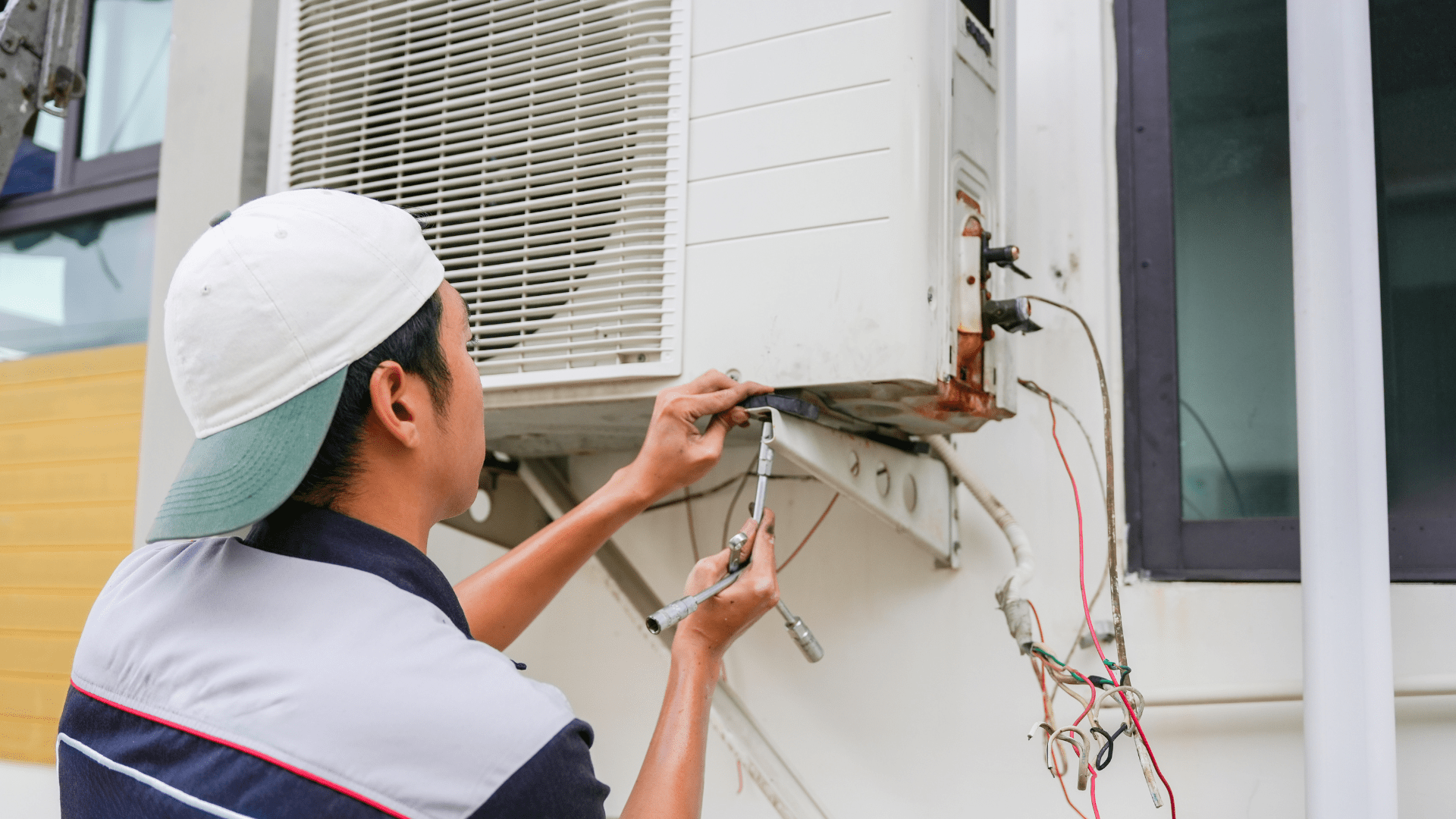
Your air conditioner should cycle on when your home needs cooling and shut off once the thermostat reaches the set temperature. If your AC starts, runs for a short time, shuts down, and starts again shortly after, you may be dealing with short cycling.
Short cycling can make it difficult to maintain consistent temperatures throughout your home. It can also place additional stress on HVAC components when the system repeatedly starts and stops. Florida homeowners may notice the issue more often because air conditioners operate for much of the year to manage both heat and humidity.
If your AC seems stuck in a constant start-and-stop pattern, schedule an AC evaluation with Coastal Climate Experts to identify what may be happening with your system.
What Normal AC Cycling Looks Like
An air conditioner does not need to run continuously to cool your home. The system should operate through cooling cycles based on the temperature inside your home, the thermostat setting, outdoor conditions, and the condition and size of the equipment.
During a hot Florida afternoon, your AC may run for longer periods because the system has more heat to remove. Longer operation alone does not necessarily indicate a problem.
Short cycling looks different.
You may notice your system turning on and off several times within an hour, running for only a few minutes before shutting down, or restarting soon after completing a cooling cycle.
Homeowners may also notice:
- Uneven temperatures between rooms
- Frequent clicking from the system starting and stopping
- An AC that seems to run constantly but never settles into a normal cycle
- Rising humidity indoors
- Weak or inconsistent airflow
- A thermostat that frequently calls for cooling
- Higher energy use without an obvious change in household habits
One occurrence does not necessarily mean your system has a serious issue. Repeated short cycles deserve attention, particularly when the pattern continues throughout the day.
Why Florida AC Systems Face Extra Demands
Florida homeowners rely on air conditioning for much of the year. Outdoor temperatures can remain high well beyond the traditional summer months, while humidity adds another challenge for your HVAC system.
Your air conditioner removes heat and moisture from indoor air during normal operation. When the system repeatedly starts and stops before completing an appropriate cooling cycle, it may not have enough operating time to manage indoor conditions effectively.
Florida’s long cooling season also means homeowners may notice equipment issues sooner, as their systems are in frequent use.
Understanding why short cycling happens can help you recognize when your AC needs professional attention.
A Dirty Air Filter Can Restrict Airflow
A clogged air filter provides one of the simplest places to start when your AC behaves differently.
Your HVAC system needs adequate airflow to move conditioned air throughout your home. As dust, pet hair, pollen, and other particles collect on the filter, airflow can become restricted.
Restricted airflow can affect how the system operates and may contribute to temperature problems or other HVAC issues.
Check your filter regularly, particularly during periods of heavy AC use. Florida homes may require more frequent filter changes because many systems run for extended periods throughout the year.
If replacing the filter does not resolve the short cycling, look beyond the filter and schedule an HVAC inspection.
Your Thermostat Could Play a Role
The thermostat tells your air conditioner when to start and stop. A thermostat located near a heat source, exposed to direct sunlight, or experiencing a technical problem may not accurately represent the temperature in the rest of your home.
Thermostat settings can also affect cycling patterns. Large temperature adjustments may cause the system to operate differently than it would with a consistent setting.
If your thermostat appears inaccurate, unresponsive, or unusually active, a professional can inspect the thermostat and its connection to the HVAC system.
Restricted Airflow Can Go Beyond the Filter
A clean filter does not automatically mean your HVAC system has adequate airflow.
Blocked vents, closed registers, dirty coils, blower problems, and ductwork restrictions can also interfere with air movement.
You may notice certain rooms feel warmer than others or that some vents produce significantly weaker airflow.
A professional AC inspection can evaluate the system as a whole rather than focusing on a single component. Identifying airflow restrictions can help determine why your system is struggling to maintain consistent cooling.
Refrigerant Problems Can Affect System Operation
Your air conditioner relies on refrigerant to transfer heat from your home to the outdoor environment. If the system has a refrigerant leak or another refrigerant-related problem, cooling performance can change.
Homeowners may notice:
- Longer or unusual cooling cycles
- Warm air from supply vents
- Ice forming on refrigerant lines or coils
- Poor temperature control
- An AC that repeatedly attempts to cool the home
Refrigerant issues require professional attention. Homeowners should not attempt to add or handle refrigerant themselves.
If you notice ice or unusual cooling behavior, turn to a qualified HVAC professional for an evaluation.
Electrical Problems Can Cause Repeated Starts
Your AC depends on several electrical components to start, operate, and shut down correctly. Problems involving capacitors, wiring, relays, control boards, or other components can affect normal operation.
Repeated clicking, unusual buzzing, burning odors, or frequent breaker trips deserve prompt attention.
Electrical HVAC problems can create safety concerns, so homeowners should avoid opening electrical panels or attempting repairs themselves. If your AC repeatedly trips a breaker or produces a burning smell, turn the system off and contact a qualified professional.
Your AC May Be the Wrong Size for Your Home
Sometimes short cycling comes down to system sizing.
An oversized air conditioner can cool a space quickly and shut off before completing a longer cooling cycle. The system may then restart once the indoor temperature rises again.
Homeowners may notice short-cycling, inconsistent temperatures, or difficulty controlling indoor humidity.
System sizing depends on several factors, including the home’s square footage, insulation, windows, layout, local climate, and other building characteristics. A professional evaluation can determine whether equipment sizing contributes to the cycling pattern.
Do not assume a replacement system is necessary simply because your AC short cycles. Proper diagnosis should come first.
When Should You Call an HVAC Professional
A short-cycling AC warrants attention when the behavior becomes frequent or persists after basic troubleshooting.
Consider scheduling an AC repair or professional evaluation if you notice
- Repeated starts and stops throughout the day
- Cooling cycles that end unusually quickly
- Increasing indoor humidity
- Uneven temperatures
- Weak airflow
- Ice around the indoor or outdoor equipment
- Frequent breaker trips
- Burning or electrical odors
- A thermostat that does not respond properly
- An AC system that struggles to maintain your preferred temperature
A technician can inspect the equipment, airflow, thermostat, electrical components, refrigerant system, and other factors that may contribute to the problem.
Keep Your Florida AC Running Through Every Season
Short cycling does not always point to one specific issue. A dirty filter, thermostat problem, airflow restriction, refrigerant concern, electrical component, or improperly sized system can all contribute to unusual cycling.
That makes diagnosis important.
You can start by checking your air filter and confirming that your vents remain open and unobstructed. If your AC continues to turn on and off repeatedly, schedule an evaluation rather than guessing at the cause.
Do not wait for the pattern to become your new normal. Schedule an AC evaluation with Coastal Climate Experts and get a closer look at what your system needs to operate properly in Florida’s demanding climate.